
Second Medical Opinion in Germany
A second medical opinion has long ceased to be a sign of distrust towards a doctor. In modern medicine, it is a tool that allows for clarifying a diagnosis, reconsidering a treatment plan, and avoiding decisions made based on incomplete or fragmented information. In Germany, obtaining a second opinion is part of the clinical culture and is integrated into the medical decision-making process, especially in complex and ambiguous cases.
Patients seek a second opinion not only when a diagnosis sounds alarming. Often, the reason is a sense of uncertainty, the absence of a clear plan, or doubts about whether the proposed approach is truly optimal.
In practice, there are several situations in which obtaining a second medical opinion is particularly justified. This applies to oncological diseases, where the entire subsequent treatment plan depends on the accuracy of the diagnosis and staging. This applies to complex surgical interventions, especially if the surgery is irreversible or may significantly affect quality of life. It is important when prescribing aggressive drug therapy, including chemotherapy or immunotherapy, as well as in cases where symptoms persist but the diagnosis remains unclear. Also, situations where the patient is already undergoing treatment, but their condition is not improving or, on the contrary, is worsening. In such cases, a second opinion allows for assessing whether the diagnosis was correct from the very beginning.

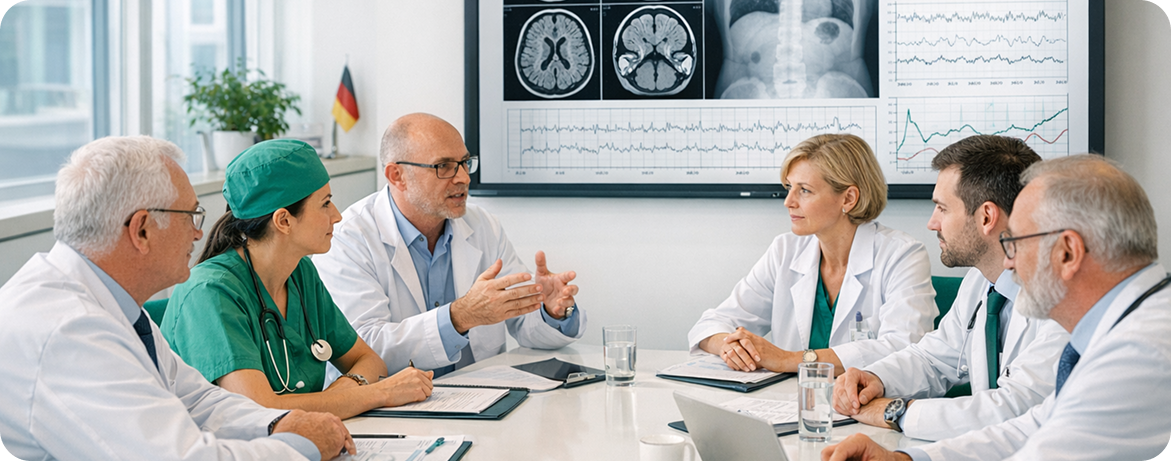
A key feature of German medicine is that a second opinion here is not a formality. In university hospitals and specialized centers, complex cases are reviewed collectively. The doctor providing the second opinion does not rely solely on colleagues' conclusions but analyzes primary data, imaging results, histology, and laboratory findings anew. It is often at this stage that discrepancies in data interpretation are identified or details that were not previously considered are clarified. This can lead to confirmation of the initial diagnosis, its revision, or changes in the scope and sequence of treatment.
The process begins with an analysis of medical documentation. This includes discharge summaries, examination results, scans, pathomorphology and histology reports. It is important that the materials are structured and translated into the working language of the clinic. Then, the profile of the specialist or center that actually handles such cases on a regular basis is determined.
After this, the doctor or medical board forms an independent opinion. In some cases, the patient is offered additional examinations to clarify the clinical picture. Only after this is a recommendation made, which may include confirmation of the previously proposed approach, its adjustment, or a fundamentally different approach.
The opportunity to get a second opinion remotely with German Medical Concierge
The modern German healthcare system allows obtaining a second opinion without an in-person visit to the country. In most cases, well-prepared medical documents are sufficient. Online consultations and remote expert opinions enable the patient to receive a balanced assessment of the situation within a short time, without waiting for a trip and without delaying decision-making.
This is especially important in situations where time is a clinical factor, and delay may affect the scope of treatment or its effectiveness.
German Medical Concierge does not replace the doctor and does not interfere with medical decisions. The team's task is to build the correct medical trajectory. This means determining where and from whom the second opinion will be truly expert, what data is necessary for an objective assessment, and at what stage it is advisable to involve a particular center.
In complex cases, it is precisely such professional medical navigation that helps avoid delays, reduce the level of uncertainty, and make a decision based on the complete clinical picture.

Obtaining a second opinion is not an attempt to question someone's competence. It is a way to protect yourself from errors that may arise due to a limited perspective, lack of data, or absence of specialized expertise. In German medicine, such an approach is considered a manifestation of responsibility on the part of both the patient and the doctor.
That is why a second opinion in Germany is viewed not as an exception, but as a tool that helps make a balanced and well-founded medical decision in the interest of the patient and their future quality of life.