
En

Charité - Universitätsmedizin Berlin was founded in 1710 as a quarantine hospital outside Berlin. Over time, it evolved into one of Europe's leading medical centers, where the very structure of modern medicine was shaped.
Scientists who laid the foundations of bacteriology, immunology, and clinical diagnostics worked here. It was the university model that made it possible to unite patient care, scientific research, and medical training into a single system. This principle remains central to this day.
Today, Charité is the largest university hospital in Europe, affiliated with Humboldt University of Berlin and Free University of Berlin. This is not merely a partnership but a unified environment where clinical practice is directly linked to science.
Unlike private clinics that follow already established protocols, treatment here is built upon the latest research. Many decisions are based on data that is still in the process of shaping future international standards.
At Charité, a patient is not confined to the scope of a single specialist. Complex cases are reviewed by a team of physicians from different fields. This approach allows for a complete picture and avoids narrow interpretation.
This is especially important in oncology. Here, treatment begins with molecular tumor analysis. This makes it possible to tailor therapy not according to a general protocol, but based on the individual characteristics of the disease.
The same logic applies in neurology and cardiology, where diagnostic precision directly affects treatment outcomes.
Charité works with patients for whom standard solutions have already failed. These may include rare diseases, unclear diagnoses, or complex clinical cases following treatment in other countries. In such situations, the ability to reassemble the case becomes key. A diagnosis can be refined, and a treatment strategy can be completely revised. This is not an exception but a normal part of university medicine. That is why Charité often becomes the point of a second expert opinion.

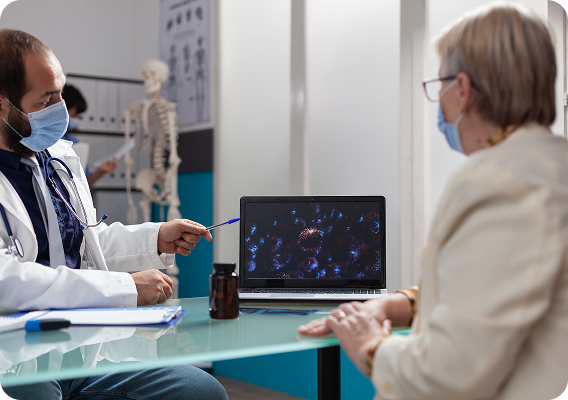
Thanks to close ties with universities and research centers, Charité is involved in the development of new diagnostic and therapeutic methods.
Importantly, these developments do not remain confined to laboratories. They are implemented in clinical practice and gradually become part of international standards. This applies to personalized medicine, immune therapies, and advanced diagnostic technologies.
One of the key elements of Charité's work is the medical board (consilium). Here, it is not a formality but a working tool.
Every complex case is discussed by a team of specialists. This approach allows all possible scenarios to be considered and the most well-founded decision to be made. For the patient, this means a high level of precision and reduced risks.

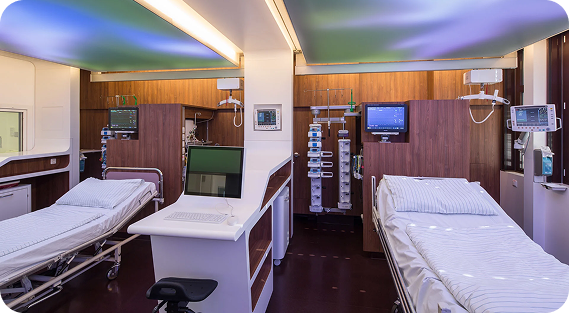
Even when choosing a clinic of Charité's caliber, the outcome largely depends on how the interaction process is structured.
Organizing treatment at a university hospital requires:
German Medical Concierge provides not just treatment organization, but strategic patient support.
The team:
This helps save time, avoid unnecessary procedures, and obtain the most accurate medical decision possible.

Charité offers access to medicine that operates at the level of data, research, and an interdisciplinary approach. Combined with the professional support of German Medical Concierge, this gives the patient not just treatment, but a well-structured system where every step is aimed at achieving the best outcome.
This is precisely the format that is becoming the new standard of medical service today.