
BRCA1 and BRCA2 testing: Why Angelina Jolie’s story changed the global approach to genetic testing

In 2013, Angelina Jolie publicly announced that she carries a BRCA1 gene mutation and had decided to undergo a preventive double mastectomy. She later also had a preventive removal of her ovaries. This step sparked a global discussion about hereditary cancer and sharply increased interest in genetic testing worldwide. The medical literature even coined the term "the Jolie Effect" — a surge in the number of women undergoing BRCA testing following her announcement.
However, behind the public story lies not an emotional decision, but medical logic. BRCA1 and BRCA2 mutations significantly increase the risk of developing breast cancer and ovarian cancer.
According to major studies:
- the risk of breast cancer in mutation carriers can reach up to 87%, compared to the general population rate of 12–13%;
- the risk of ovarian cancer can reach up to 50%, compared to an average risk of about 1–2%;
- there is also an increased risk of pancreatic cancer, melanoma, and in men — breast cancer and prostate cancer.
The mutation is congenital. A person is born with an altered BRCA1 or BRCA2 gene. It does not develop during one's lifetime and can be inherited from either the maternal or paternal line. The probability of passing it to a child when one parent carries the mutation is 50%.
Who Should Consider Testing
Genetic testing is not indicated for everyone. It is recommended when certain family history factors are present.
Reasons for consultation may include:
- cases of breast cancer in close female relatives before the age of 50;
- multiple episodes of breast cancer within one family;
- ovarian cancer at any age in female relatives;
- breast cancer in a male family member;
- a combination of breast and ovarian cancer in one woman;
- a confirmed BRCA1 or BRCA2 mutation in a family member.
Testing may also be indicated for patients already diagnosed with cancer, as the result influences therapy selection and prognosis.


Testing Methods: PCR and NGS
There are two main approaches to detecting mutations.
PCR diagnostics is a more affordable method that is widely used. However, it detects only a limited number of the most common mutations. In some countries, such tests can identify up to 8 variants of changes. This means that rare mutations may go undetected, creating a false sense of security.
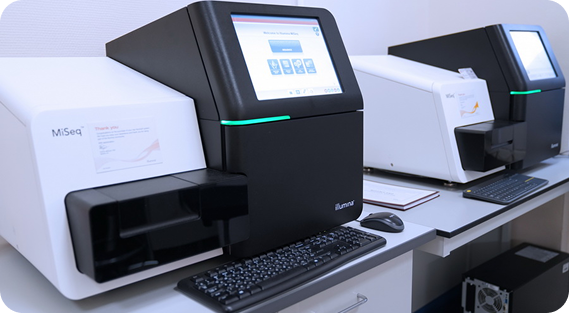
NGS sequencing (Next-Generation Sequencing) is a modern method considered the gold standard in genetics. It allows the complete "reading" of the BRCA1 and BRCA2 gene sequences and can detect thousands of possible mutation variants. Unlike targeted testing, NGS provides a significantly more complete and accurate picture.
It is precisely NGS technology that is used at leading oncology centers in Germany. This type of analysis is not simply a blood draw — it is a tool for comprehensive assessment of individual risks with subsequent clinical interpretation.

What a Negative Result Means
A negative test does not guarantee that cancer will never develop. It means that at the time of the study, no BRCA1 or BRCA2 mutations were detected.
In this case, the risk corresponds to the average statistical level, provided there are no other serious risk factors. This does not cancel regular preventive check-ups: gynecological monitoring, mammography after age 40 or earlier if indicated.
It is important to understand that a genetic test evaluates specific genes. It does not rule out other mechanisms of cancer development.
What a Positive Result Means
Detecting a mutation is not a cancer diagnosis. It is information about an elevated risk, on the basis of which a personalized strategy is developed.
Possible steps may include:
- enhanced screening and more frequent examinations;
- regular breast MRI;
- monitoring by specialized physicians;
- discussion of preventive surgical interventions;
- in the presence of disease — therapy selection based on genetic status.
Today, innovative targeted drugs that have demonstrated high efficacy are available to mutation carriers. In Germany, access to such advanced treatment methods is part of standard clinical practice.
A genetic analysis is not just a laboratory result. It requires professional interpretation.
In Germany, interpretation is performed by clinical geneticists and oncologists who work with the largest international mutation databases. The patient receives not only a report, but also a personal consultation with a detailed explanation of individual risks and a clear plan of further action.
It is precisely the combination of accurate NGS technology and clinical interpretation that helps avoid underestimation or overdiagnosis.
The question of genetic testing rarely ends at the laboratory. It involves the choice of clinic, analysis method, specialist, and further monitoring strategy. German Medical Concierge does not replace a physician and does not make medical decisions. The team's objective is to ensure proper medical routing:
- determine whether testing is indicated in a specific situation;
- arrange the analysis at a specialized center in Germany using NGS;
- provide translation and structured handling of medical documentation;
- arrange a consultation with a clinical geneticist and oncologist;
- build a further monitoring or treatment plan in accordance with German and international protocols.
This approach is especially important in situations where test results influence serious decisions or therapy choices.

A BRCA1 and BRCA2 test is not just a blood test. It is a tool of personalized medicine.
A positive result is not a sentence. A negative result does not mean an absolute guarantee. What truly matters is what decisions are made based on the data obtained.
In the German healthcare system, genetic testing is regarded as part of a comprehensive clinical strategy. And professional medical navigation makes it possible to transform risk information into a clear and well-founded action plan aimed at preserving health and quality of life.